The UK has for many years pursued a “two-mode” solution to how roads and streets are managed; that is to say we have space for driving and space for walking (and this includes wheeling). This approach has given us an urban model of a footway on each side of the street with a carriageway in the centre and in fact, the idea of raised “sidewalks” as a way for carriages is as old as the idea of cities.
For the last century, the UK has gradually ceded carriageway space to the movement and sometimes the storage of motor vehicles. This mission creep has largely gone unnoticed by the populace and so has become part of our culture – that’s how our streets should look like and as a result our place is on the sides to leave space for the metal machines.
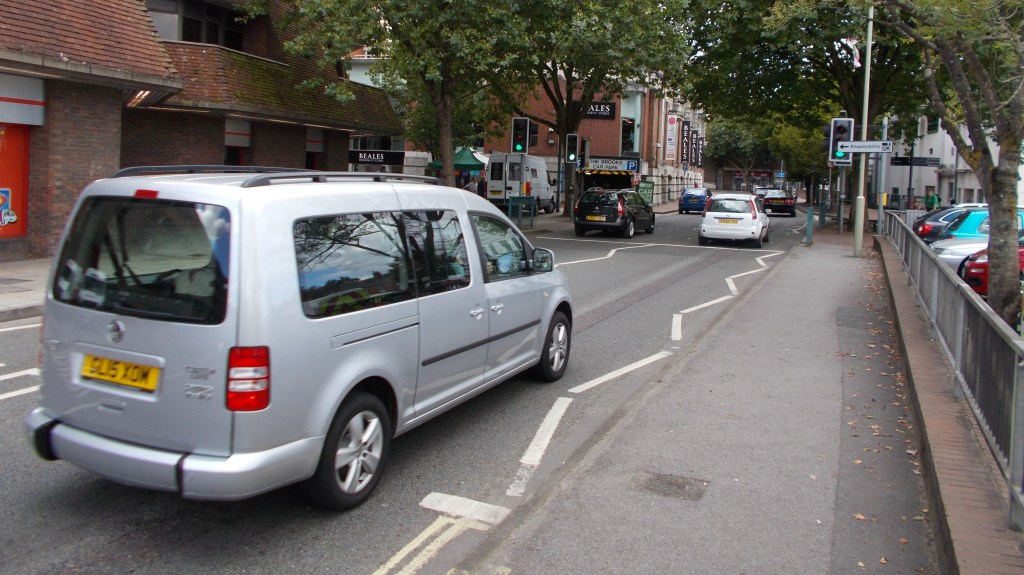
Of course, this cultural motornormativity means that even those who don’t drive see the world this way and in most cases are accepting of it. The problem is, that under this model, people using different forms of locomotion need to cross each other. Because of the blend of physics, psychology and culture, we are often in a “might is right” situation which means that in all but very low (motor) traffic situations, it is those who are behind the wheel that get priority and the disruption of that is the challenge both technically and for those used to having their own way.
We have pedestrian crossings in the toolbox and we can use the highly visual features which come with legal force and indeed a developed culture of use so that in theory, the presence of a stripy piece of road with flashing yellow globes or a three colour light box with a line across the road can give pedestrians the ability to manage the mighty and cross the stream. In situations where we are not using these administrative controls we are then relying either on the boldness of the person crossing or the courtesy of the person behind the wheel. It doesn’t always work well.
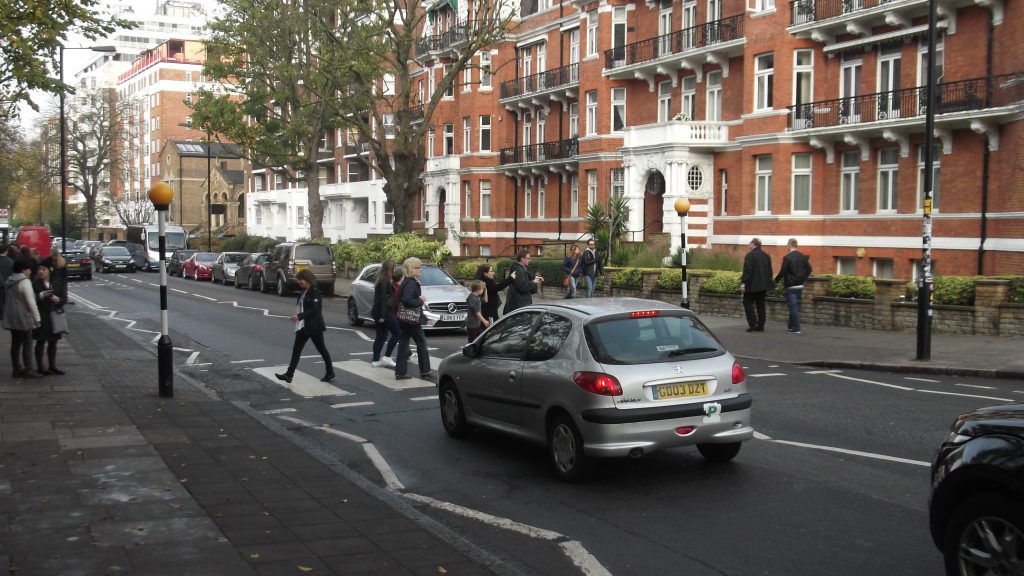
Crossing side streets is a slightly different matter because unless signalised or assisted with a zebra crossing, pedestrians have to go it alone in the very zone where motordom interacts with its own flows and as a result, the risk of conflict might increase. The recent update to the Highway Code pushed the idea of a “hierarchy of road users” which by the very use of the word “road” immediately comes with the cultural baggage of 100 years. The hierarchy rules do however make it very clear that drivers (and cyclists) turning into or out from a side street should give way to people crossing or waiting to cross.
The problem is, this rule is a should and not a must which means that it isn’t backed in law as such, but at least being in the Highway Code, it might help in apportioning blame after a collision. However, nobody should be hurt just for walking along the street and what this reinforcement of the hierarchy actually does is to empower designers to use layouts to reinforce the side street crossing priority that pedestrians have – continuous treatments being one such design response, although it isn’t as simple as that.
We can go a long way to manage what happens when the streams cross with the aim being that people experience an interaction, or at the worst case, the odd conflict. We really want to try and avoid collisions because that’s when physics and biomechanics come into play with those carrying the least energy into a situation coming off badly. If the worst happens, then we want the layouts to be forgiving enough to prevent serious injury or death and that has to mean slower drivers taking less energy into the situation.

So we have two modes that need to cross each other and while we can use engineering backed up with some rules to manage how they interact, it is a model that we have come to culturally accept over the years. Streets and roads which look and operate in this way is the norm. Whenever we seek to change what has become the accepted norm, we get concerns, worries, maybe alarm and certainly backlash. What could be a better challenge to the norm than throwing the new-fangled idea cycling for transport into the mix?
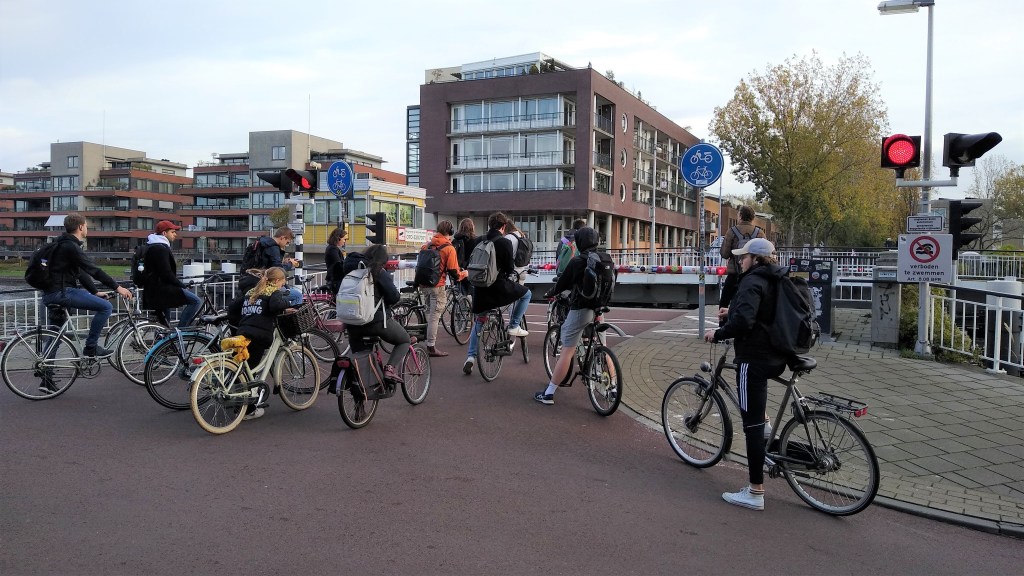
Now, there is some interesting Dutch thinking that needs to be considered here because in some circles of academic and professional practice, there is a concern that cycling risks recreating some of the problems that motoring did in towns and cities. While cycling is quiet and pollution-free, the sheer volume of cycle traffic in some places means that pedestrians have some of the same issues of crossing the road that they did with cars, even though people are moving more slowly and clearly carrying less energy into the game.
That is why some cities are routing “through cycling” away from denser pedestrian areas to leave those who might live, shop or work in a particular location. It is also worth remembering that some parts of the Netherlands has been go successful at squeezing motor traffic out of city centres, that cycle tracks that originally protected people are no longer needed because drivers really are the guests and so the streets can be put back to their historic layout.
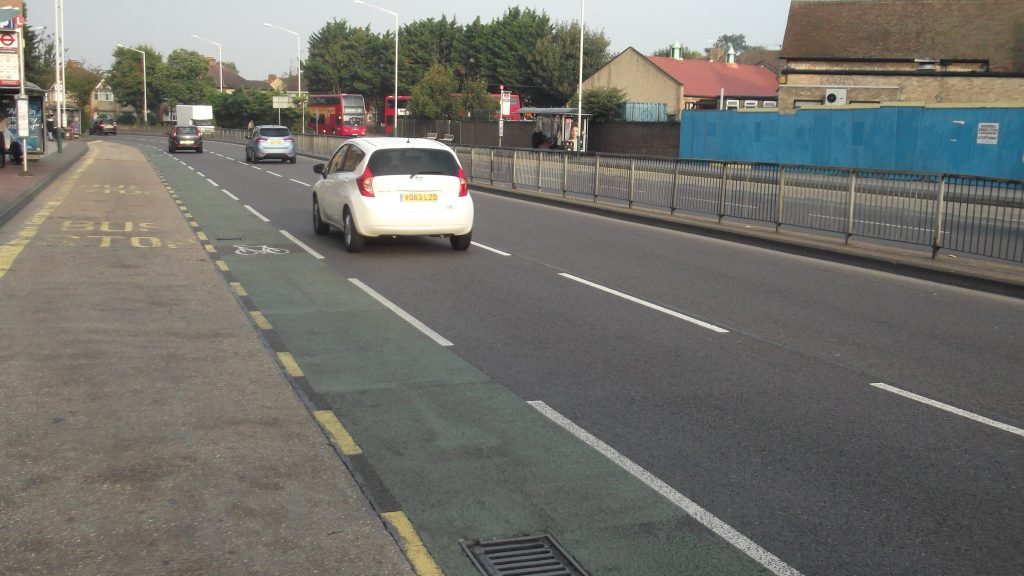
There are few places like this in the UK and so back to the thought process. The mention of cycling and cyclists is guaranteed to elicit negative responses from some people and while some of it seems to be ideological, some of it really is to do with cultural norms being disrupted and in design, the classic UK fudge has been bolting cycling onto either pedestrian space or driving space. This in turns we get both cyclists on the pavement and cyclists not using the painted lanes punctuated by car parking and bus stops that cost very little to install and offer no protection at all.
In reality, cycling is the third mode that towns and cities need for transport because it neatly fills the distance gap between walking and driving (for those who drive of course). If we go back to the principles of designing for cycling, we either need to reduce motor traffic volumes and driver speeds down to a level where people can feel safe mixing with low levels of slow traffic or we must protect them from motor traffic.
From a pedestrian point of view, people cycling can be an intimidating addition to the street, especially where we’ve been culturally conditioned to accept the two-mode model and rightly, we shouldn’t be expecting people walking to have to mix with people cycling. Wheeling is interesting as it is method of locomotion which can make use of both walking and cycling space depending on the individual and the type of wheeling they are doing. The upshot is we need cycle tracks separated from walking space and driving space – the third mode to somehow incorporate in our century of cultural motorisation.
There also needs to be thought about what modal hierarchy actually means. Decent transport policy rightly puts walking (and wheeling) at the top of the tree, but this is a policy position in general and not a rigid requirement for every single situation where modes cross because it is an absolutist position which does push cycling back out of the picture and unfortunately it’s used by both bad faith actors and those who haven’t properly thought the implications through to object to change. Remember some people are already worried about a changing world which they may feel unable to influence, but we must also remember there are people trying to push a wedge between walking and cycling in an effort to maintain their status quo.
We are now having to design for three modes and with the two-mode model, these three modes will inevitably have to cross each other and again, it is how we manage those interactions which is important from a design point of view, especially as we are having to reboot cultural baggage at the same time. New build should be easy to integrate a third mode into, but developers seem to struggle to grasp the implications and retrofitting can be very tricky indeed (but that’s why designers are employed to assist).
Either way, there are going to be many points of interaction and our design response should be based on the energy differences between the modes; but, even slowly moving motor vehicles carry way more energy into a situation and so these will need the most engineering. The energy differences between people walking and cycling are much smaller and therefore the appropriate design responses will be lighter touch and at the human scale. Trying to use (motor) traffic techniques in pedestrian/ cyclist interactions will fail and potentially create more risk for some users. At this point, it is also worth considering that the administrating controls of the formal crossings mentioned at the start of this post are not safety features, they are (motor) traffic management features and if you really think about it, most of the features used to either protect people from motor traffic or help them cross it are actually motor traffic infrastucture.
Managing the driving and cycling streams crossing creates new challenges above that of managing walking and driving. Cycles are vehicles capable of speed and this comes into play when designing junctions whether signalised or uncontrolled. Layouts which cause people cycling to lose too much speed or stop are those which are more likely to be ignored because it’s not about breaking the rules, it’s about the energy needed to get going which is why continuous treatments over side streets, bypasses of T-junction signals for ahead movements and free left turns as signalised junctions are useful. Where parallel zebra crossings are being considered, the fact that cycle traffic can be moving relatively quickly means that there needs to be space and time for drivers to see, think and react to enable them to stop.
Walking and cycling streams crossing is a different matter. For a great extent, cycle tracks will just run next to footways and while everyone moves ahead, it’s fine. However, pedestrians will want and need to cross cycle tracks either mid-block as they will do with a road or it will be at junctions and bus stops. The design responses will often look similar as with crossing the road with dropped kerbs either side of a cycle track and sometimes mini-zebra crossings, although the research shows that behaviour with or without a mini-zebra crossing doesn’t alter that much but it does show that users understand who has priority. In certain situations, traffic signals will be used, but this really needs care because people cycling will break the rules and cycle through a red light. That’s not because everyone is a scofflaw, it’s back to the whole energy thing.
If cycle traffic has to be stopped, then it is better as part of a signalised junction and only where there are special location or context specific reasons. Otherwise, people can be left to get on with it. Most of the time, walking and cycling flows cross each other, but one of the modes isn’t present at any given time so there is no interaction. Sometimes, there will be interaction with people adjusting their path or speed. Maybe we’ll occasionally get a conflict where people get irritated or angry with each other. Rarely, we will get a collision but while a pedestrian really doesn’t want to be hit by someone cycling, it is also the case that someone cycling doesn’t want to hit someone walking because they can come off badly too. Of course, there needs to be a culture developed whereby people cycling take responsibility for the safety of pedestrians because they are the party carrying the most energy. That is consistent with the user hierarchy.
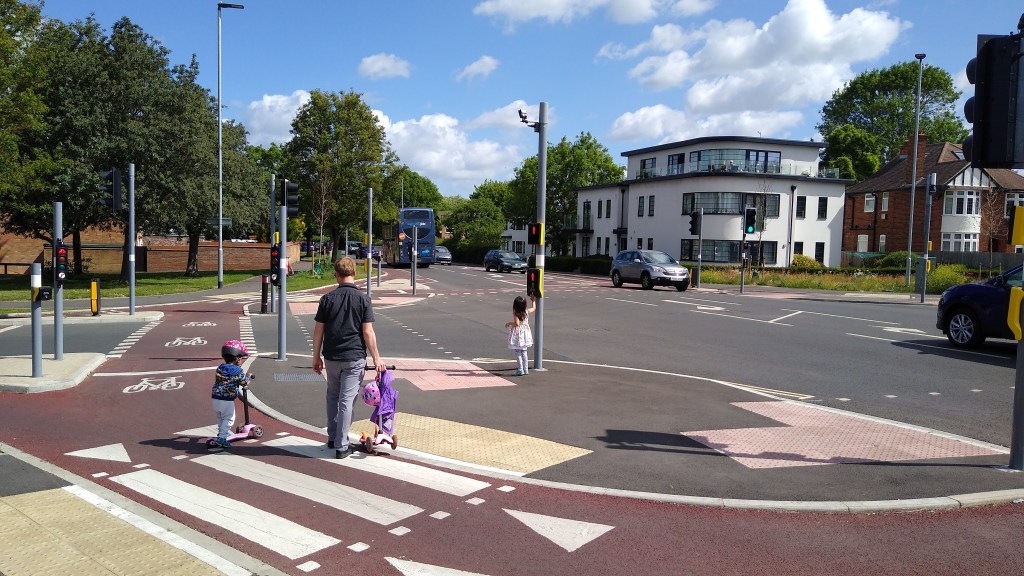
Bus stops are currently the most controversial point of where the streams cross. On the one hand, there are people and groups who absolutely do not want people to have to cross a cycle track to get to a bus. Equally, people cycling do not want to have to mix with buses or general traffic and so any policy of ending cycle tracks at bus stops is simply not going to enable a diverse mix of people to cycle. The flipside is there are people very worried about having to cross a cycle track. It might be because they are visually impaired, they may be deaf or they may just feel intimidated having to cross a stream of cyclists. We cannot generalise and within groups, there are smaller groups or individuals with needs or concerns that need airing and discussing.
This does mean, however, that organised groups who simply object to floating bus stops or any other situation where a cycle track needs to be crossed without any discussion or engagement really are on the path to acting with bad faith and at the higher policy level, their view may need to be afforded less weight than they think is due. It is hard to separate genuine concerns with bad faith and so there needs to be a concerted effort to get to the nub of any issues and if that means bypassing groups for one to one engagement, then so be it.

This seems to be a slightly negative place to end this post at, but that’s not the intention. The purpose of this post is to try and get people to think in the round about outcomes, especially against the cultural norms which have developed over the last century. If we are in agreement that we want better places which respond to the human scale and allow people to travel under their own steam (or with a bit of electrical assist), then we need to allow cycling to take its rightful place. If we are to do that, then we must appreciate that the human-powered modes have to interact, but equally that in a changing world, people feel threatened with changes coming to both their experiences and their learned culture. It’s not always simple, but it has to be worked through.
*****
 City Infinity
Useful piece, RH.
I think I’d like to see more detailed thinking about just how we fit a three mode infra in with the variety of vehicles we have or are going to have.
What should count as a “pedestrian”, and how should that be defined?
Should e-bikes or bikes be on footways, as mobility aids or if the road is dangerous as at present? Is a 4mph speed limit reasonable definition?
What is the future for Shared Paths, if any?
What should go on the ‘cycling’ network, and how should it be defined? I’m inclined to suggest E-Bike (various varieties), E-scooter, perhaps microcar which fits within the cycling design vehicle footprint?
What are the legal rights around footways especially wrt to motor vehicles driving and parking on them? I’m quite inclined to go for reducing any footway to less than 2.4m unless a registered exception by putting a motor vehicle on it is an offence, and such being enforced. That makes implicit that <2.4m footways cannot be parked on at all.
But this govt have been sloping their shoulders for many years, and we now have an abusive culture.
LikeLiked by 1 person