When we developed our guide, The Joy of Kerbs, there were two types of standard unit missing in the UK, the “entrance block” and the “cycle track kerb”. These are units are common in The Netherlands, known as “inritbanden” and “rijwielpadbanden” respectively, but in the UK we’ve either tried to do the same job with our standard units or expensively procured units made from natural stone. But wait, maybe we need to take a quick step back and actually explain the jobs these two units do.
Inritbanden
Put simply, intritbanden are large concrete blocks which create ramped access side street junctions where we wish to provide priority for walking and cycling along the main road using continuous treatments.
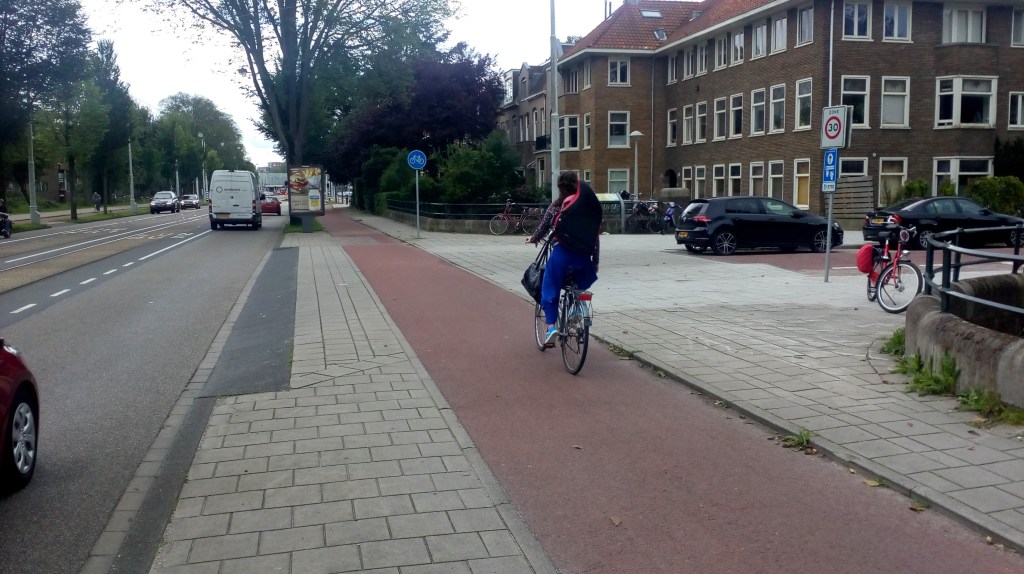
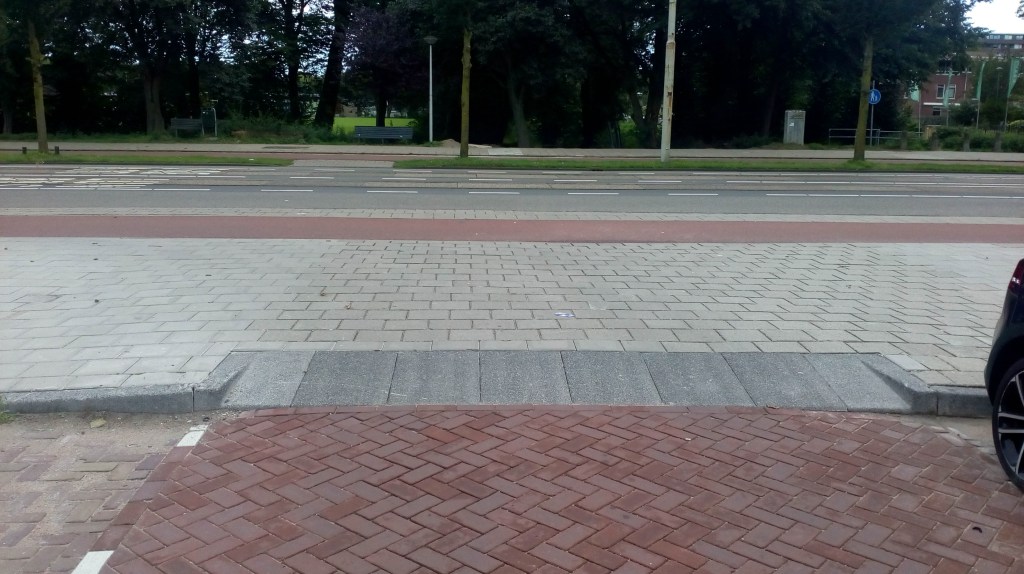
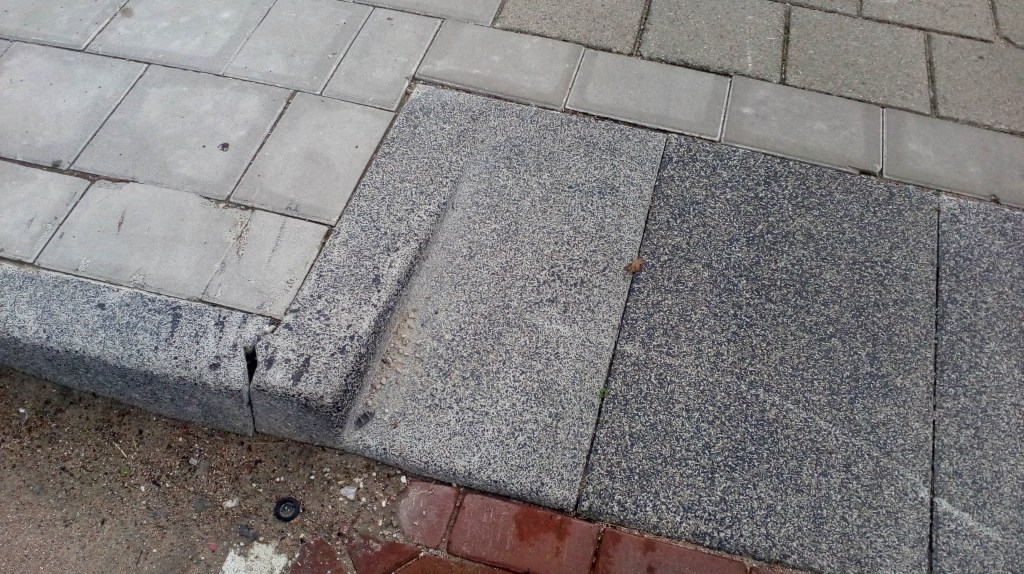
The photographs above show intritbanden in action and as you can see the footway and cycle track levels are maintained across the side street which gives both visual and designed priority for walking, wheeling and cycling. Drivers have to enter and negotiate the space which provides a clear transition between a local (side) street and a connector type road and the motors do the physical work of getting over the hump. Anyone accessing the side street by cycle simply turns in and out of the cycle track at the junction to join the carriageway, or they could cross the main road so long as access to the cycle track on the other side is provided for in a with-flow situation.
Rijwielpadbanden
While inrtibanden are concerned with crossing footways and cycle tracks by motor vehicles, rijwielpadbanden are concerned with the separation of walking and cycling. The Dutch approach on connector roads is that walking and cycling need protection from general traffic and that the two modes should also be separated because it is safer (including subjective safety) and more legible. A height difference between the two modes also helps provide the separation between modes and having a kerb kerbs visually impaired users detect the footway edge.
The problem with providing a kerb is it creates safety risks for people cycling in terms of having an upstand which can “grab” a wheel of one gets too close as well as the potential to catch a pedal (known as “pedal strike”). The Dutch solution is to go with a sloped kerb with a maximum of 30° from the horizontal which is less likely to grab a wheel and with a maximum kerb upstand of 50mm to reduce the pedal strike risk and which should still be detectable to visually impaired pedestrians. One of the other benefits of this approach which isn’t often mentioned is that it allows people to join and leave the cycle track (with care) which is really helpful for mobility scooter users and those using non-standard or adapted cycles who may not be able to dismount or lift their cycle onto the footway (to access shops, homes, offices etc).

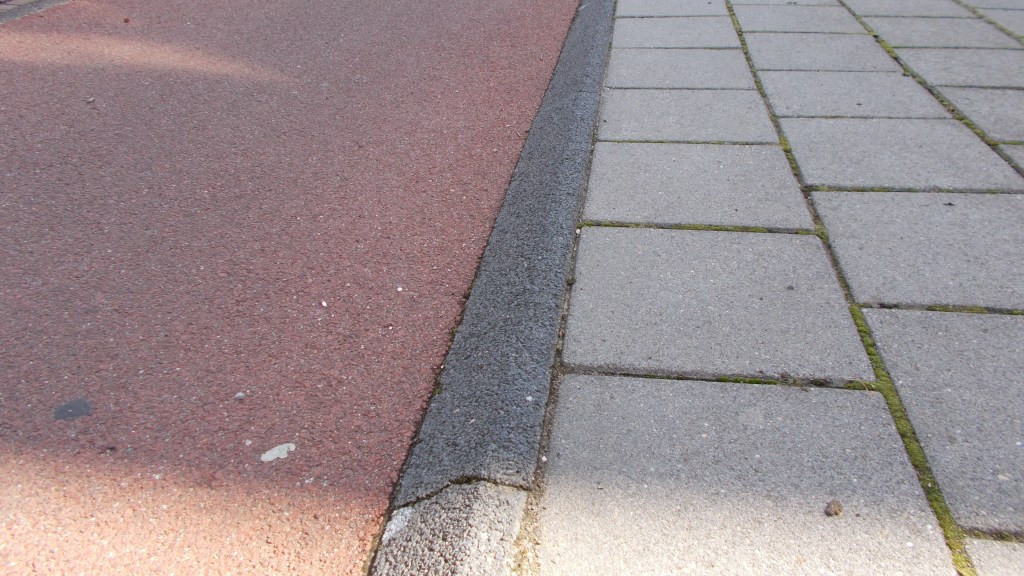
The photographs above show a with-flow cycle track. The paved buffer to the left is at the same level as the cycle track, but the footway to the right is higher (stepped). As you can see, the rijwielpadbanden between the footway and the cycle track is sloped.
Going Dutch in the UK
In The Netherlands, there is a huge array of kerb profiles, whereas in the UK, we have a much more limited toolkit with kerb units that tend to have been developed for trunk road style applications, at least as far as standard precast units go. These standard units have been tricky to incorporate into urban practice where there are lots of different things to consider and competing priorities. We have tried to tackle continuous treatments with varying success, but unless we plump for bespoke natural stone, our approach always feels compromised.


The photographs above show slightly different ways continuous treatments have been achieved. On the left, the cycle track and footway are at carriageway level with dropped kerbs used to give drivers access across the area. In the centre, an asphalt ramp brings drivers up to footway level, but then dropped kerbs are used to bring them down to cycle track and then carriageway level on the main road. On the right, the footway and cycle track does continue at the same levels through the junction, but asphalt ramps on both sides simply cannot match the elegance of inritbanden.

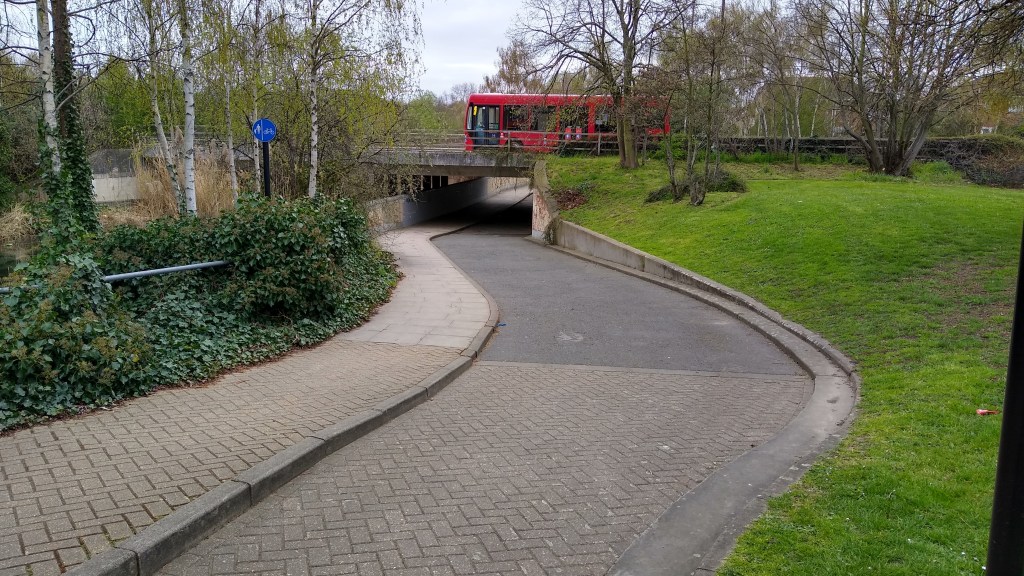
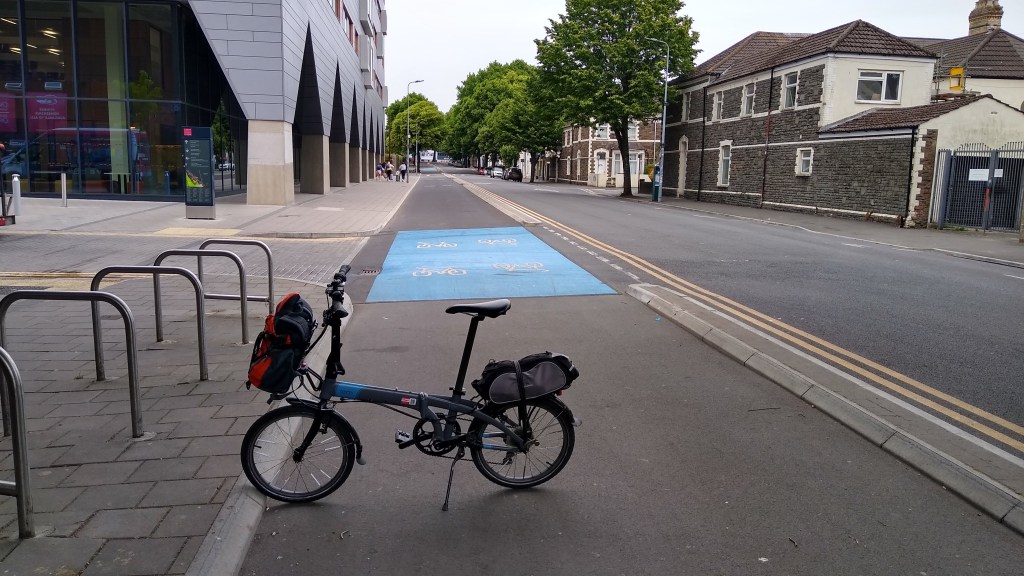
For cycle tracks, we’ve either just left them at the same level as the footway (above left), gone with standard kerbs (above centre) or 45° splay kerbs (above right). The problem is, none of these solutions have quite given us the tidy and more accessible outcome that the Dutch approach has given.
In “The Joy of Kerbs”, we talked about the need to bring both types of unit into the UK and we postulated what the sizes and profiles could look like. We now (happily) need to update this guidance because these units are now available from a UK manufacturer. Charcon, part of Aggregate Industries, has brought out entrance kerbs and cycle track kerbs which solve the issues the UK has only really managed to deal with in a compromised way. Both products are being used by Coventry City Council for its cycleway projects and it was great to see them in the wild recently.
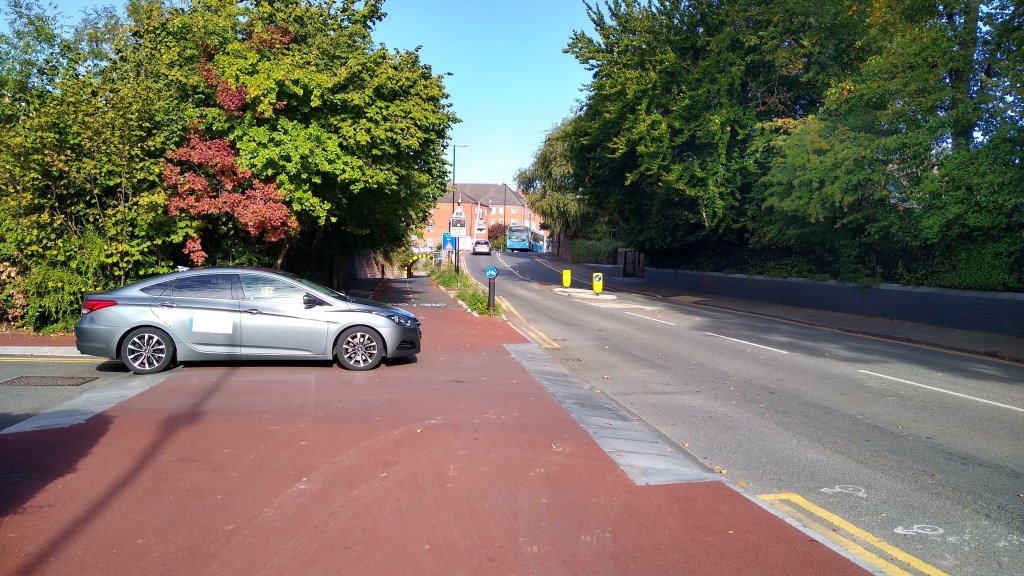
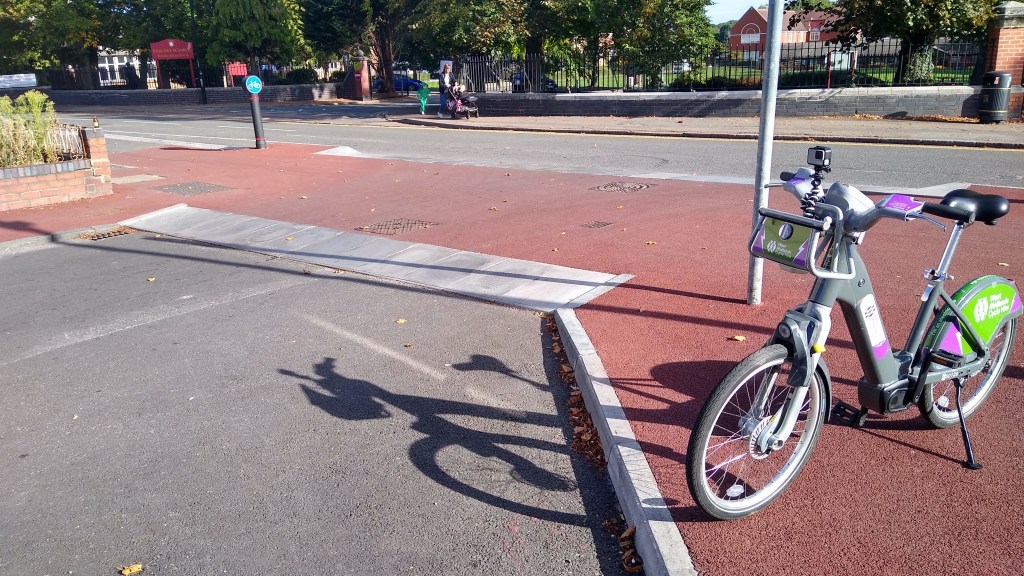
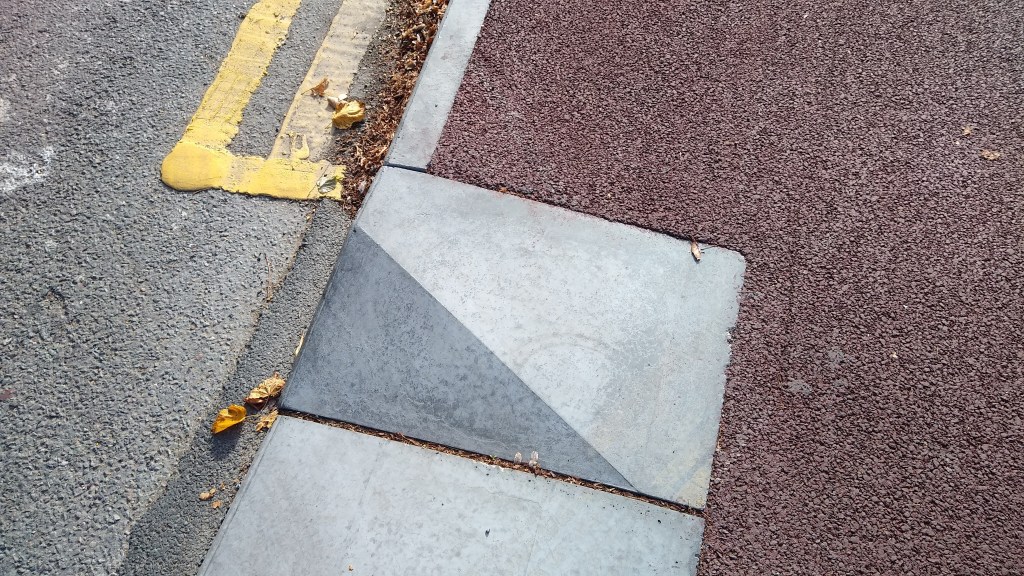
The photographs above show Charcon’s Dutch Entrance Kerbs in action on the Coundon Cycleway helping to provide a tidy continuous treatment where walking, wheeling and cycling crosses side streets. The units tie into standard HB kerb profiles and they make detailing simple.


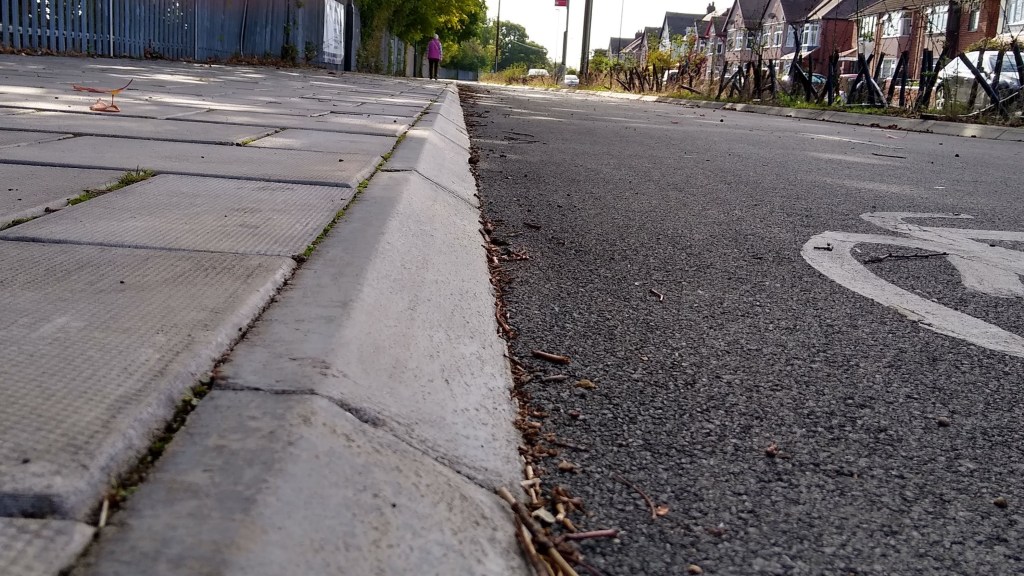
Meanwhile, Charcon’s Bristol Kerb, a 30° splay kerb, has been deployed between the footway and cycle track on a large section of the route where everything has been reconstructed from an area which used to be footway, verge and carriageway. You can see the finished result on the Hollyfast Road section of the route above.
Conclusion
The UK has made great strides in recent years on the tools which can be used for better walking, wheeling and cycling schemes, but these two kerb types really were needed to give designers the opportunity to turn good schemes into great schemes. Of course it isn’t quite as simple as specifying a couple of kerb units, schemes need to be designed in detail, but we no longer need to get by with limited options and compromise.
If you need help with your design and are thinking of using the units discussed in this blog post, then we can assist you. Get in touch with us – more here on our Contact page.
 City Infinity