The creation, debate and adoption and law should probably be boring and something most people don’t need to worry about, but there are things which come up from time to time which people should be aware of as they could have a profound impact.
The Bus Services [No.2] Bill started as a proposal around bus franchising and how local authorities might decide how bus services should be locally organised and ran. It also included provision for safeguarding school services and a push for zero emission vehicles in England.
The Bill started in the House of Lords (a Bill can start in either House) and at the time of writing has entered the House of Commons committee stage (after the 1st and 2nd Readings) in which the proposals are being scrutinised as currently set out. The committee stage examines a Bill on a clause by clause basis and within which amendments and new clauses are proposed and discussed. The next stage will be the Report Stage where any proposed amendments coming from the committee are debated and voted on before the Third Reading where there is a vote to pass or reject a Bill.
The reason why this Bill has stated to attract interest from those interested in transport and streets is because the Lords stage introduced an additional section called “safety and accessibility of stopping places” – in other words bus stops. This section was looking to introduce a power that the Secretary of State would (essentially) provide guidance on bus stop design and it also proposed a clause to cover so-called “floating bus stops” where a cycle track passes between the footway and a footway being an “island” for boarding and alighting. It also proposed a duty for local authorities responsible for the streets to report on how they have consulted on proposals (we’re paraphrasing to an extent here).
Now it in the Commons Committee stage, there are moves to introduce clauses that would ban the use of floating bus stops and other restrictive and onerous processes on design in England (as this are is devolved elsewhere).
There is the ability for citizens and organisations to submit written evidence and that is just what Mark has done. He has read through the background and the current proposed amendments and new clauses and in the round, a ban on so-called floating bus stops will effectively put an end to highway authorities being able to build cycle tracks in England and so cycling as transport as a choice will largely end. It is this fundamental. Mark’s written evidence is reproduced below and while so-called floating bus stops have been a point of a great deal of concern, discussion and opinion, the debate in Parliament (where it matters) seems devoid of technical input.
Written Evidence Submission – Bus Services [No. 2] Bill
Mark Philpotts BEng (Hons) CEng FICE FCIHT FIHE PIEMA MTPS RegAT(IHE)
29th June 2025
1. I am an independent highway design consultant who specialises in sustainable mobility design and I have 30 years of civil and highway engineering experience in the public and private sectors, including 14 years leading the highways design team with London borough. My last decade has seen me specialising in sustainable mobility design. I have designed for all highway user modes and consider myself to have considerable experience of the issues at hand.
2. I have a degree in civil engineering and I hold fellowships with the Institution of Civil Engineers (ICE), Chartered Institution of Highways & Transportation (CIHT) and the Institute of Highway Engineers (IHE). I am a practitioner member of the Institute of Environmental Management & Assessment, a member of the Transport Planning Society and an associate member of the Society of Road Safety Auditors. I also hold a Professional Diploma in Active Travel Planning & Design.
3. I am the author of CIHT’s Designing for Walking [1], a contributor to Planning for Walking [2] and a supporter of Progressing the UK Towards Safe System Implementation [3]. I am a speaker for the PTRC Education and Research Services “Principles of Traffic & Transport” lecture series where I cover street and highways design; and designing for walking.
4. I am a CIHT Technical Champion, a member of the ICE Transport & Mobility Knowledge Network and a member of the Beyond the Bicycle Coalition. I am a blogger and writer specialising in civil engineering, sustainable mobility and highways under my pen name The Ranty Highwayman [4] and finally, I have a monthly column in Highways Magazine [5].
5. I am making this submission purely in relation to the design-related matters being discussed within the passage of the Bill and the associated amendments which I understand to be with the following clauses based on the position set out in the amendment paper of Monday 30 June 2025 [6] – 30, 31 and 32; and proposed new clauses NC11, NC12, NC13, NC40 and NC47.
6. First, I would like to state that I do not believe the prescription of design responses should be a matter for this, or any other bill. It has long been the case that local highway authorities are responsible for how they manage and change their highway networks in line with their duties and by using their powers. Such authorities have elected councillors who are accountable to their electorate.
6. I note and acknowledge the legitimate concerns of some campaigners and individuals in this matter and they articulate their position far better than I can. However, there are some who refuse to countenance the need for dialogue and compromise and in the case of some organised and resourced groups, they steadfastly refuse to explain what the alternative design approaches should actually be.
7. It has also long been the case that for England, the Department for Transport (DfT) will, from time to time, publish guidance that highway authorities might wish to use. In some cases, such guidance might be conflated with standards, especially if linked to the requirements of a funding body.
8. I am therefore of the view that that this Bill should not prescribe how highway authorities should design or manage their networks. It is right that the DfT uses its resources to provide and update guidance on a range of design matters, but this is “business as usual” and does not require legislation. Indeed, this is already a matter covered by S39 (1) of the Road Traffic Act 1988 [7].
9. The foregoing stated, I am aware of some of the debate of the Bill through its progress and the arguments being presented. I am not aware of any wider technical briefings or professional advice that have been provided to Members, but on reading some of the written submissions I am concerned about where this Bill might lead and this is the end of cycling for transport in England for most citizens.
10. From a highways legislative perspective, there is no definition of either “floating bus stop” or “shared-use bus boarder”, although, the term “bus stop bypass” appears in Local Transport Note 1/20 [8] in Section 6.6. This is important as in terms of legally defined highway elements, we are dealing with cycle tracks, footways and carriageways as set out in S329 of the Highways Act 1980 [9] and as set out earlier, it is for local highway authorities to decide how their highways should be design or manage their networks, powers for which are contained within Part V of the same.
11. The term “floating bus stop” probably entered technical and campaigner parlance in the early 2010s with “shared-use bus border” some time later. The London Cycling Design Standards [10] published in 2014 used the term “floating” for layouts pertaining to bus stops, but also for parking and loading in Chapter 1.
12. However, different arrangements of carriageways, cycle tracks and footways have been used for decades and which, as far as I am aware, have not attracted the same level of interest as for bus stops. Figure 1 shows an arrangement which is very clearly what might be described as a “floating bus stop” on Clockhouse Lane in the London Borough of Havering.
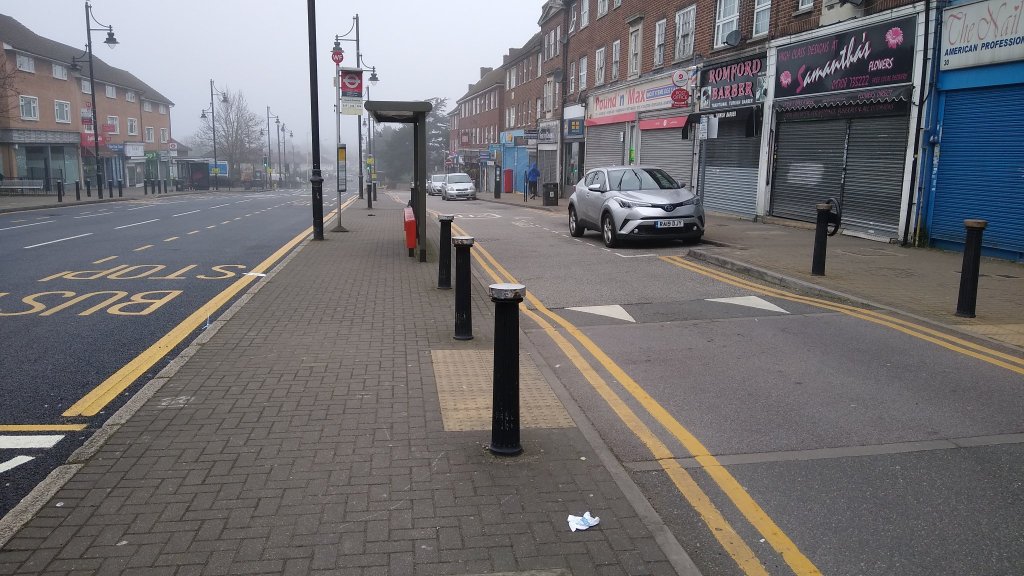
Figure 1 – Clockhouse Lane, London Borough of Havering
13. I make no claim about its quality or accessibility, but I choose the image as it is a project I led the design on prior to 2008 (the oldest view using Google Streetview) in which we made changes to the long extant service road and bus stop to make it easier to access. I was with the London Borough of Havering until 2019 and I do not recall any complaint or concern raised about the layout. In fact, this arrangement is surprisingly common with examples decades-old and there is no discussion, concern or campaigning around this type of design.
14. There has been an increase in the use of this design principle with cycle tracks in the last 10 years which coincides (rightly in my view) with the general political consensus and investment in cycling as a means of transport which gives people more choice in how they travel for all or part of their journeys.
15. It is important to note that in opinion polls and research that many people won’t cycle with heavy or fast moving traffic and so the provision of reserved and protected cycling space is a vital and fundamental response to this. For example Wave 9 of the National Transport Attitudes Survey [11] noted that safer roads was the more popular factor that would encourage people to cycle more and safety concerns were the main reason for discouraging people to cycle.
16. The use of reserved and especially protected space for cycling is part of a network- level approach to designing for cycling and there is plenty of guidance in LTN1/20 around how this might be achieved. Most simply, cycling networks will be formed by using streets with low levels of motor traffic use and protected space on busy roads. Busy roads are often whose which contain the shops, services and facilities that all citizens want and need to access including those cycling and using buses.
17. At the network-level, it is therefore certain that there will be cases that bus networks and cycling networks coincide; and in the majority of cases they will coincide with a busy part of the motoring network. I shall return to this later.
16. I do not wish to diminish the legitimate concerns raise by some bus users who are worried by the increase in use of floating bus stops, but if England is to enable cycling, then design responses are required for when the needs of people using buses and cycles will coincide. The correct design response will often be a floating bus stop and without this design concept, the ability for highway authorities to provide for cycling as transport will largely end.
17. There are far wider issues at play. Streets with high levels of motor traffic and bus stops require floating bus stops. Streets with low levels of motor traffic and high levels of bus traffic with bus stops require floating bus stops. It is only streets with low levels of motor traffic and lower levels of bus traffic with bus stops which might provide conditions for cycling in mixed traffic.
18. It is within the power of highway authorities, planning authorities and the government to work towards motor traffic reduction. Where this is very successful, then very little is required in terms of interventions to protect people cycling, but this requires network redesign and this takes time and crucially investment. Until and unless this happens, there will be a need to provide cycle tracks and therefore floating bus stops.
19. Two-way cycle tracks on one side of the street can reduce the number of floating bus stops and which is a possible solution in some contexts, but a ban of floating bus stops will make the delivery of two-way cycle tracks impossible, unless on a one-way street which becomes less useful for bus passengers.
20. It might be possible to have cycle routes on different streets to bus routes, but this reduces the utility of cycling as transport where users wish to access the same places as those arriving by bus. In some contexts, cycle tracks might be provided in the centre of wide highways, but this makes it harder for people cycling to access frontages.
21. However, the network planning and design strategies which arise should be for the highway authority and its elected councillors to made decisions on and the ban on a particular feature will hamper this ability.
22. I think it has become easy for people to coalesce around a street feature they might have legitimate concerns with or might dislike. It is far harder to coalesce around the wider problems there are with how highways are designed and managed at the network-level because this requires wider societal and political issues to be confronted which are highly complex.
23. Priority junctions are a good contrast. The vast majority of junctions in the UK are simple priority junctions (sometimes called T-junctions or side road junctions). In many parts of the UK, these junctions fail to meet the basic level of service of having flush dropped kerbs and tactile paving, even before there is a discussion about how they actually operate in practice. It would be bizarre for a bill to start including clauses to outlaw such junction designs, but so many are not accessible and suffer from a poor safety record. It is also very difficult to campaign around the quality of such designs as wide-ranging improvement to these require a profound change in the way streets are designed and managed.
24. It is right that there should be continuing learning around how people move within the street environment and ways to improve accessibility and inclusion should be at the core. It is also right that guidance should be updated to reflect our improved knowledge, but this should be business as usual with commensurate investment.
25. I therefore turn back to the clauses as hand and my comments follow, but I do not believe any of the clauses and new clauses should be contained in this Bill.
26. Clause 30, insert (6A) and (6B). As stated above, I believe that guidance is a matter of business as usual and does not require inclusion in this Bill. However, (6A) would require written Secretary of State approval for a departure from guidance. Guidance is not a standard and therefore cannot be departed from. Any design decisions should remain with highway authorities and their elected councillors. (6A) and (6B) would suggest a lack of understanding on what guidance is and how it works. For (6B), LTN 1/20 already exists as guidance and its revision should remain business as usual.
27. Clause 31. Guidance should be business as usual for DfT and not included in this Bill.
28. Clause 32, insert (1A) and (1B). This places additional burden on highway authorities to record street features and which ignores the much larger issue of how streets are designed and managed. I refer to my comments about priority junctions.
29. NC11. This ignores the much larger issue of how streets are designed and managed and that highway authorities already have duties in this area arising from the Equality Act 2010.
30. NC12. This clause would end the ability of highway authorities to design protected cycling space and therefore bring cycling as transport to an end in England for most people. This would exclude whole sections of society and especially those who cannot or do not drive. It would also further embed the reliance of private motor vehicles for transport which will perversely impact on bus reliability and patronage.
31. NC13. This should be ongoing business as usual work. The Member’s explanatory statement fails include the need to collaborate with other groups who have clear interest.
32. NC40. This would create significant resource burdens on highway authorities. It is isn’t clear if the Member is suggesting the historic layouts as I have shown in Figure 1 as well as the multitude of bus stops with cycling layouts which can be found over the last several decades. There is no discussion around where the resources will come from to undertake assessments or make changes. This should be a business as usual matter for highway authorities and funding bodies.
33. NC47. This is really a combination for NC12 and NC40. NC12(1) would end the ability of highway authorities to design protected cycling space and therefore bring cycling as transport to an end in England for most people.
34. The design and implementation of changes to streets covers overlapping and conflicting user needs. It is complex and a constantly developing field of practice and campaigning. The inclusion of design-related matters is and the prohibition of street features in this Bill is misguided at best. I have written about the issues which Members might like to review as part of their overall technical understanding. Specifically my blog posts of 16th February 2025 [12] and 30th October 2021 [13]. I also draw Members to my business blog post of 11th March 2023 [14] which looks at some of the wider issues.
35. I shall conclude by restating my belief that there should not be any reference to bus stop design in this Bill. Design matters are for highway authorities and their councillors to decide on and guidance should be a business as usual matter for DfT. I will restate my point that many of the amendments and proposed new clauses would end the ability of highway authorities to design protected cycling space and therefore bring cycling as transport to an end in England for most people.
36. I thank Members of the committee for their attention and consideration.
[1] https://www.ciht.org.uk/media/4460/ciht_-_designing_for_walking_document_v2_singles.pdf
[2] https://www.ciht.org.uk/media/4465/planning_for_walking_-_long_-_april_2015.pdf
[4] https://therantyhighwayman.blogspot.com/
[5] https://www.highwaysmagazine.co.uk/
[6] https://publications.parliament.uk/pa/bills/cbill/59-01/0229/amend/busservices_rm_pbc_0630.pdf
[7] https://www.legislation.gov.uk/ukpga/1988/52/section/39
[8] https://www.gov.uk/government/publications/cycle-infrastructure-design-ltn-120
[9] https://www.legislation.gov.uk/ukpga/1980/66/section/329
[10] https://content.tfl.gov.uk/lcds-chapter1-designrequirements.pdf
[12] https://therantyhighwayman.blogspot.com/2025/02/floating-bus-stops-redux.html
[13] https://therantyhighwayman.blogspot.com/2021/10/floating-bus-stops.html
[14] https://cityinfinity.co.uk/2023/03/11/crossing-the-streams/
 City Infinity